
Back in the day…. waaaaay back in the day a computer endpoint was basically a terminal with a monochrome monitor. If you don’t know what a monochrome monitor is, I’d invite you to Google an old arcade game called Asteroids. That or walk behind a point-of-sale system at your local Macy’s.
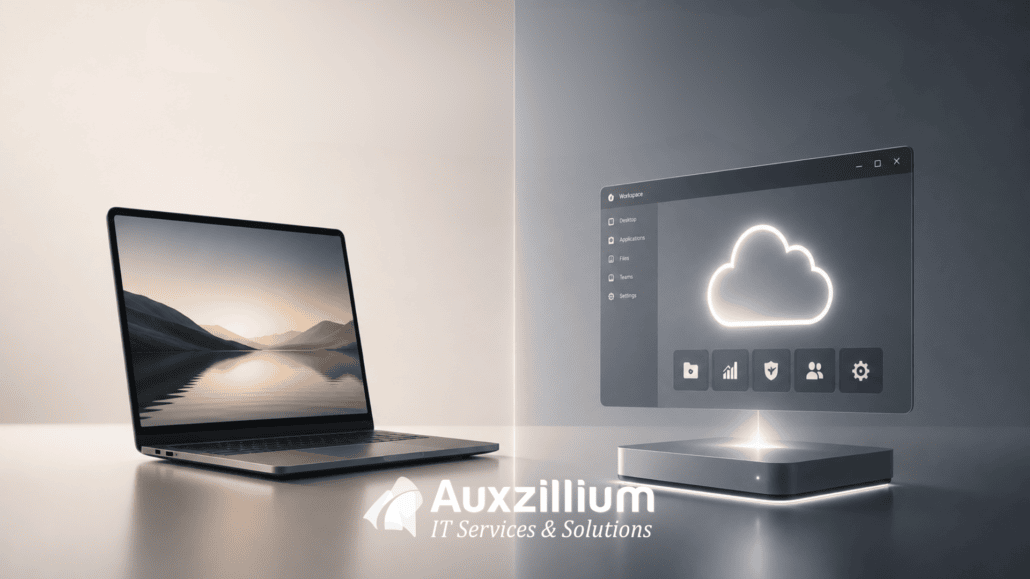
Over time endpoints were defined by the term “CPU”. A box on your desk with a microprocessor and memory running some form of Windows or Mac OS. Today, endpoints can still sit on your desk, but they are much smaller. Some of those smaller endpoints look like the old terminals but they are called “Thin Clients”. A thin client is typically backed by some kind of virtual infrastructure. We call these VIRTUAL DESKTOPS.

In modern deployments, the virtual infrastructure located in your building is no longer necessary and has been moved to the cloud. This makes your virtual desktop and corporate resources accessible from anywhere in the world. You don’t even need a VPN and it is completely secure.
With all the options which solution is the best one for your business? I remember discussing virtual desktops with a client many years ago. The discussion arose because of aging hardware and a proprietary business application whose developers showed little motivation in hosting it within a cloud. Accessing it across a traditional site-to-site VPN or remote-client VPN created a horrendous user experience. Enter COVID. Now, you had a business with multiple offices forced to access an application running on a server in a building that was only accessible over VPN. In this case, virtual desktops became necessary. It was the only way their employees and the business could survive.
Now, virtual desktops may have met their need, but it doesn’t mean it will meet yours. There can be countless variables that must be considered when defining how a modern is constituted, deployed, and managed. Not the least of which is cost. Another contributing factor: What are your business hours and employee profile?
Virtual desktops have tremendous value, but a proper CBA and their TCO must be considered. Most businesses continue to deploy laptops and desktops (micro-PC’s) and for the most part, that approach is more than sufficient. However, it is incredibly important that those behind your technology vision aren’t just familiar with the terms but possess the experience and capability to not only deploy a broad scope of technologies but properly guide your business in making the best choice possible.
At Auxzillium, the constitution, procurement, and deployment strategy of your businesses’ endpoints is backed by decades of experience. Perhaps it’s worth a conversation to explore yours.
