

If you are following these blogs, Auxzillium really likes to “keep up with the Joneses.”
In our previous blog, we talked about ConnectWise and supply-chain attacks. This week it almost feels like an infomercial run by Ron Popeil, where he popularized the quip: “But wait, there’s more.”
If you’re not familiar with Ron Popeil, in the 90s you could get some food injectors, pasta makers, electric food dehydrators, and more if you woke up early enough to see his infomercials.
As we typically do here, we have digressed.
The point remains valid, though. Auxzillium doesn’t just want to talk to you about generic things in these posts but also current events.
Last week’s post was about a current event, and no sooner had the ink dried on that paper, yet another cybersecurity event has taken place that behooves our addressing.
Critical PHP Vulnerabilities and Cybersecurity Risks
The world of Information Technology is riddled with acronyms. I mean, there’s even a pun in that statement. Most acronyms are riddles to most.
Over the last week, you’ve probably heard about something called PHP.
PHP means Hypertext Preprocessor. For the most part, when talking about PHP, we are talking about websites or web interfaces.
There are currently 2 critical PHP vulnerabilities (CVE-2026-109618 and CVE-2026-109619). ~70% of websites use PHP and therefore, much of the web is at risk.
How PHP Vulnerabilities Impact Managed IT Services
We’re not web developers at Auxzillium. We do not design or host websites.
However, we do manage many elements of an infrastructure that can be or are web-facing. Since they are web-facing, they are potentially impacted by the vulnerabilities listed above.
As an MSP, if the vulnerabilities touch a sphere of our management responsibility, then more than likely they will touch your MSP also.
Proactive Cybersecurity: A Call to IT Arms
Vulnerabilities like this are a “Call to IT Arms,” for lack of a better term.
A holistic review of every client and their deployed resources must immediately be undertaken and addressed.
Last week we mentioned how quickly the supply-chain attack on ConnectWise moved.
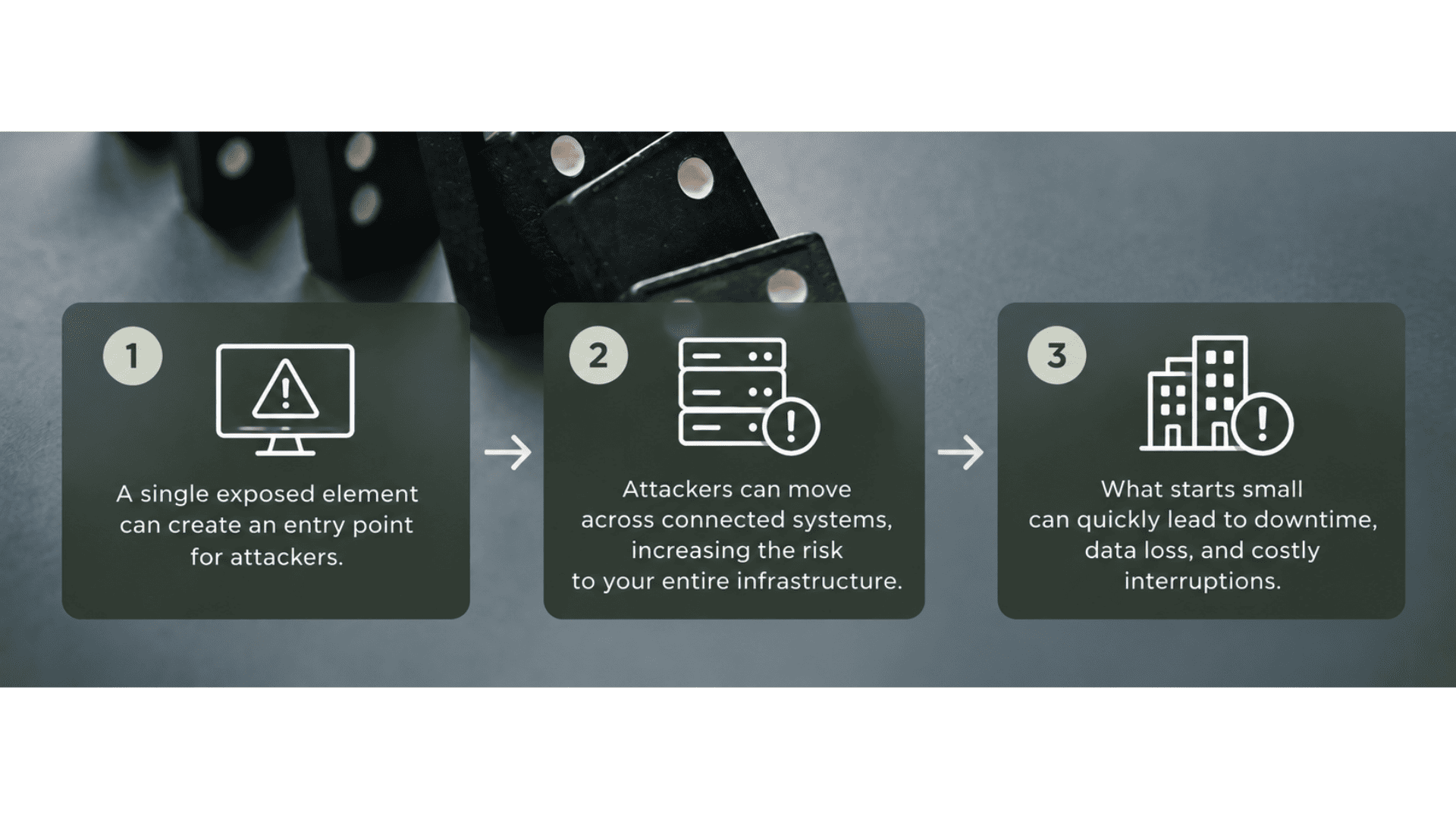
As I mentioned, 70% of the web uses PHP, and although the amount of PHP within your infrastructure may be small, your MSP cannot quantify your exposure by its limited prevalence.
If any element of your infrastructure is exposed, your business is exposed.
How Auxzillium Responds to Cybersecurity Vulnerabilities
Over the last week, Auxzillium exercised this “Call to IT Arms.”
Any systems impacted at any client were categorized, communicated, and remediated.
If there was no impact to the client in performing the steps of remediation, they were performed immediately.
If any impact on users could be expected, Points of Contact (PoC) were notified, explanations were given, needs were conveyed, and elements were addressed.
What You Should Expect From Your Managed IT Services Provider
Vulnerabilities on a scale such as this require internal coordination, research, and communication with clients.
This is the level of commitment to your business’s cybersecurity position that you can expect from Auxzillium as your MSP, and you should expect from yours.
